Key Facts:
- The Threshold: 44% of non-EV owners say they’d “seriously consider” electric if fuel hits or exceeds £2/liter—the reported tipping point.
- The Holdouts: 29% of respondents state rising fuel costs would not influence their decision to switch, regardless of price.
- The Reality Check: Used EV values dropped 9.1% in recent months while petrol cars rose 5.1%, complicating the total-cost narrative.
- The Access Gap: Home charging at ~1.8p/mile vs. public at ~18p/mile means savings aren’t universal—especially for the ~1/3 without driveways.
Fuel Pain Is Real, But ‘Consideration’ Isn’t Conversion
If you’ve watched petrol creep toward £2/liter, you’ve felt the squeeze. But here’s the automotive equivalent of a Tesla’s “0-60 in 3.1 seconds” claim: saying you’d “seriously consider” an EV is a far cry from signing the finance agreement. The Kazoo and Motors survey of 2,008 buyers highlights a familiar pattern—hypothetical interest doesn’t always translate to showroom traffic. It reminds me of Rivian’s early hype vs. actual delivery timelines: excitement is easy, execution is hard.

Who’s Behind the Numbers
Kazoo and Motors polled in-market decision makers, identifying £1.99/liter as the psychological tipping point. Marketing director Lucy Tugby notes sensitivity to fuel costs—but the leap from “consider” to “commit” requires more than pump pain. For context, that’s like Ford claiming Mustang Mach-E interest is surging while actual sales lag behind Tesla Model Y volumes. Sentiment is a leading indicator, not a lagging one.
The 29% Who Won’t Budge
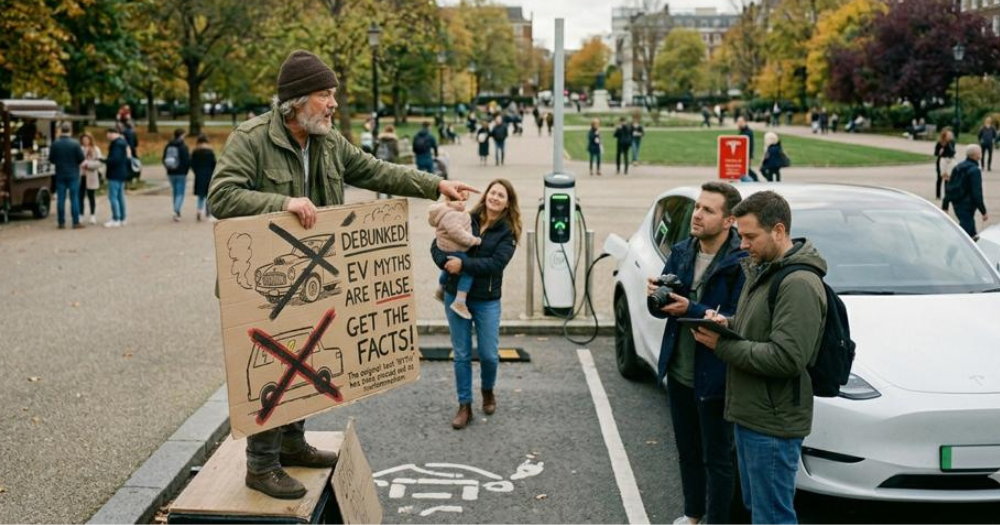
Here’s the kicker the headlines often bury: 29% of respondents say they’d never buy an EV, regardless of fuel prices. That’s nearly one in three drivers—a demographic reality that complicates the ZEV mandate’s 2035 targets. These holdouts cite concerns over depreciation (EVs down 9.1% vs. petrol up 5.1%), charging access, and total cost of ownership. It’s the automotive version of a diesel driver refusing to go back to petrol after experiencing torque: once you’ve formed a preference, data alone rarely changes minds.
What This Means for You
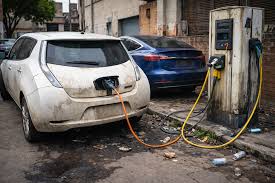
If you’re weighing an EV vs. a hybrid or efficient petrol, look beyond the per-mile math. Yes, home charging at 1.8p/mile beats petrol’s ~14.5p/mile—but public charging at 18p/mile erases that advantage. And with used EV values still volatile (see: Nissan Leafs from £1,400 but with battery health questions), the “safe” choice isn’t always the electric one. For private buyers, the decision hinges less on ideology and more on your driveway, your commute, and your risk tolerance.
The Broader Signal
This tension exposes a fundamental challenge for EV advocates: policy and PR can nudge consideration, but only real-world usability and value drive conversion. Unlike Norway’s coherent incentives, the UK’s patchwork of taxes, tariffs, and infrastructure gaps risks alienating the very drivers it aims to convert. Expect lobbying groups like New Automotive to double down on “economic resilience” narratives—but watch the actual used car transaction data, not the survey headlines, for the true signal.
Monitor the next SMMT used EV transaction report and Kazoo’s quarterly consumer panel—the gap between “consider” and “commit” will narrow only when value and access align.